
MARI Stage 11: The Creative Chaos of Disintegration

MARI Stage 11: The Creative Chaos of Disintegration
November strips things back, and I often feel that movement before I can explain it.
By now, summer feels far away. The trees have released most of their leaves, the light is thinning, and winter waits just beyond the edge of the month. Nature is no longer displaying its fullness. It is breaking down, composting, and preparing for a renewal we cannot yet see. There is something honest about this season. It does not pretend that letting go is always graceful.
This seasonal movement mirrors Stage 11 of the MARI Great Round: Disintegration. If Stage 10 begins the process of letting go, Stage 11 takes us deeper. The familiar structure may not simply loosen. It may crack, scatter, or fall apart.
I know how unsettling that can feel. I am someone who naturally looks for meaning, pattern, and the thread connecting one experience to another. Stage 11 can make the thread disappear for a while. It may feel restless, reactive, chaotic, or overwhelming. Several problems can seem to arrive at once, and different parts of us may want entirely different things. No one appears to be in charge of the committee meeting inside our head.
And yet, I have learned not to mistake disintegration for failure. This stage is not meaningless chaos. Something may need to break open before it can be reformed, realigned, or renewed.
The Double Energy of Eleven
Numerologically, eleven is often associated with the visionary: spiritual insight, illumination, empathy, inspiration, and the ability to sense what lies beyond the obvious. Its shadow can include anxiety, overwhelm, and fear of being fully seen.
I find this pairing especially fitting for Stage 11. At the very moment our outer or inner world feels least coherent, intuition may become louder. Dreams can intensify. Synchronicities may appear. We may glimpse something profound and still have no idea what to do with it. I have certainly known the strange experience of sensing that something important is unfolding while also wishing it would kindly explain itself.
The two ones in eleven can resemble two strong parts standing side by side, each insisting on its own truth. One part wants to surrender. Another wants to regain control. One feels inspired. Another feels terrified. One is ready to leap into the unknown. Another would like to crawl backward into a well-defended, highly organized cave. I recognize all of them.
Eleven also reduces to two, the number associated with connection, balance, cooperation, sensitivity, and the peacemaker. This softer two energy reminds us that disintegration is not meant to be endured through heroic isolation. We may need relationship, support, reflection, and a willingness to let opposing parts begin speaking to one another.
This is where the numerology becomes deeply human for me. The shadow of two can appear as people-pleasing, passivity, overdependence, or trying to keep the peace at the expense of what is true. I know the temptation to smooth over discomfort so everyone, including the parts within me, can settle down. Stage 11 may refuse that arrangement. What has been politely held together may finally insist upon being felt.
When the Old Structure Can No Longer Hold
During Stage 11, old thoughts, identities, attachments, and defenses may begin to fracture. Nonessential pieces are peeled away. What once kept us functioning may no longer be able to contain what is moving through us.
I have seen this in my own life and in the lives of people I have accompanied through change. A role, relationship, belief, or way of coping may have served us faithfully, sometimes for years. Then one day it no longer fits. Psychologically, this can feel shattering or disorienting. We may experience stress, confusion, agitation, disillusionment, or a strong wish to return to an earlier, more defended way of being. The desire for rigidity makes sense when everything feels unstable. Control can look very appealing when the ground is moving.
At the same time, we cannot hold back indefinitely under high stress. Sometimes there is an unexpected relief in admitting that we do not have control and cannot force every part of life back into its former shape. I do not always arrive at that relief willingly. Sometimes I have to exhaust several excellent plans first.
Stage 11 can reveal faults, flaws, contradictions, and truths that were easier to avoid when the structure was intact. It clears debris. As someone who values integration, I can feel impatient with the scattering. And the scattering may be precisely what helps us distinguish what is essential from what is merely familiar, what is alive from what we have been maintaining out of habit, fear, or loyalty.
A disruption may become an opening for deeper unconscious material. What first appears to be a catastrophe may also reveal something unexpected. This does not mean we need to romanticize suffering or pretend every painful event is secretly wonderful. I would never want to place that burden on anyone. It means that even within disruption, the psyche may be working toward greater honesty, flexibility, and freedom.
A Personal Reflection on Not Knowing
I am someone who naturally wants to gather the pieces, understand the pattern, and make meaning from what is happening. That impulse has served me as an artist, therapist, teacher, and creator. I like insight. I like integration. I also appreciate a good plan.
Stage 11 does not always cooperate with that preference.
I recognize this energy especially after completing a large creative project. There can be satisfaction, followed by an odd emptiness or restlessness. The structure that held my attention is gone. One part of me wants to rest. Another is already reaching for the next idea. Another wonders what any of it meant and where I am supposed to go now.
I also recognize it when life itself changes shape before I have caught up emotionally. The old identity has begun to loosen, and the new one has not yet introduced itself. That internal chorus can feel messy and contradictory. It is also creative chaos. Something may be building before it is ready to be released, and trying to name it too quickly can interrupt the deeper process.
Even after many years of working with the psyche, I do not always enjoy the in-between. I can still want the answer, the direction, or at least a small sign with an arrow that says, This way, Mari. Stage 11 reminds me that meaning cannot always be rushed. Sometimes the most honest thing I can say is, I do not know what this is becoming yet.
There is humility in that sentence. There may also be freedom, and perhaps a little more room to breathe.
Creative Chaos in the Body and Psyche
Stage 11 may be felt in the body as stress, pain, exhaustion, agitation, excitement, or a strange mixture of all of them. Energy can feel scattered or as though something is decomposing from the inside out. This does not mean every physical symptom is symbolic. Bodies deserve practical care and attention. And the body may still be expressing the strain of an inner life that is reorganizing itself.
Over the years, I have learned to listen more carefully when my body seems to be speaking louder than my mind. I may not immediately understand the message, and I try not to force an interpretation. Sometimes the most respectful response is simply to notice, tend, rest, seek support, and allow the body to be part of the conversation.
Dreams may become disruptive, vivid, or nightmarish. Intuition may heighten. Altered states of consciousness, unusual perceptions, or meaningful synchronicities may become more noticeable. Transpersonally, Stage 11 can be understood as a time of purification: a necessary breaking down that prepares the way for regeneration.
This is often the territory writers, artists, and poets know well. A work is completed, the energy that carried it has dispersed, and the question rises: What now? I know this threshold. Before the next form appears, there may be scribbles, fragments, false starts, fatigue, and a strong temptation to give up.
The psyche is not always tidy, and it has never been especially impressed by my color-coded plans.
Stage 11 in the Mandala
A Stage 11 mandala may show little sense of harmony or organization. It may be scribbled, careless, fragmented, messy, or disorderly. The colors may be muddy, dark, overly bright, or clashing. Lines may be jagged. The image may have no clear center and, at times, no obvious relationship to the circle at all.
When I sit with a mandala like this, I try to notice my own impulse to rescue it, interpret it, or make it more aesthetically pleasing. The person creating it may feel frustrated or want to stop before it is finished. There may be a sense that the image is wrong, ugly, or going nowhere. I understand that impulse too. We are often more comfortable with art that reassures us than art that tells the truth.
And this is where the art asks something important of us: Can we allow the image to be honest before we ask it to be beautiful? Can we stay with what is fragmented without immediately organizing it into a lesson?
This is one reason I continue to trust the mandala so deeply. It does not require the psyche to be articulate, polished, or ready. A mandala does not need to look harmonious to be meaningful. Sometimes the lack of harmony is the message. The image may be holding a psychic experience that words cannot yet contain.
The Trickster at the Threshold
The archetypal figures associated with Stage 11 include the clown, trickster, and fool, along with images such as Mardi Gras, the Wheel of Fortune, the Tower of Babel, apocalypse, or the end times.
The trickster both delights and irritates me. These figures overturn the expected order. The trickster disrupts rules, exposes pretense, and rearranges what we thought was fixed. The fool steps forward without certainty. The Wheel of Fortune reminds us that life turns, whether or not we feel ready. There is wisdom here, and also the uncomfortable realization that the psyche may not be consulting our calendar.
Even the image of apocalypse originally points toward revelation: an uncovering. What collapses may reveal what was hidden underneath. I find that understanding more compassionate than seeing Stage 11 only as destruction. It does not erase the pain. It helps us remain curious about what the breaking open may be showing us.
This can be one of the spiritual gifts of the visionary eleven. Illumination does not always arrive as a beam of peaceful white light. Sometimes it arrives when the lights flicker, the set falls down, and we suddenly see the stage machinery that had been hidden behind the scenery.
Meeting Stage 11 Without Forcing Resolution
The invitation of Stage 11 is not to surrender our discernment or remain alone in overwhelming circumstances. It is to loosen the demand that we must immediately restore order and return to who we were.
My own instinct can be to gather the pieces quickly and begin arranging them into something useful. Sometimes that is exactly what is needed. At other times, it is a way of escaping the vulnerability of not knowing. Stage 11 asks me to notice the difference.
We may need to face shadow material, release former attachments, and allow outdated ideas or patterns to disintegrate. Anxiety may need to be acknowledged as part of the experience rather than treated as proof that we are doing it wrong. I try to remember that discomfort and danger are not always the same, while also honoring the moments when genuine support and protection are needed.
Support matters here. The reduced two energy of eleven reminds us to seek connection without abandoning ourselves. A trusted friend, therapist, spiritual practice, creative process, or caring community can help us remain in relationship with what is unfolding. I believe deeply in this kind of accompaniment: not fixing one another, and not leaving one another alone in the dark.
The task is not to become passive. It is to become more flexible, more able to tolerate ambiguity, and more willing to let the deeper process show us what cannot travel forward.
November's Invitation
November can feel stripped down. The beauty of autumn is still present, and it is mixed with bare branches, shorter days, and the unmistakable sense that the year is moving toward completion.
I am not writing about Stage 11 from a polished place above the mess. I know the wish to make meaning quickly, to find the lesson, and to turn pain into something useful. I also know how lonely it can feel when the pieces do not yet form a picture. If you are there, I am not asking you to hurry. I am sitting beside you in the not-knowing.
The number eleven carries vision and overwhelm, light and shadow. Reduced to two, it also carries the possibility of relationship, inner dialogue, and a more compassionate balance between opposing parts. To me, that is one of the quiet gifts hidden within this difficult stage: we may be fragmented, and we do not have to be abandoned.
We do not have to make the pieces fit before they are ready. We may only need to stay present, listen closely, and trust that the psyche is clearing space for a form that has not yet arrived.
The question I am holding this November is not, How do I put everything back the way it was?
It is, What is being revealed now that the old structure can no longer hide it?
Sometimes wholeness begins by allowing what is false, exhausted, or no longer alive to fall apart. And sometimes the first sign of renewal is simply knowing we do not have to walk through that falling apart alone.
With warmth,
About the author
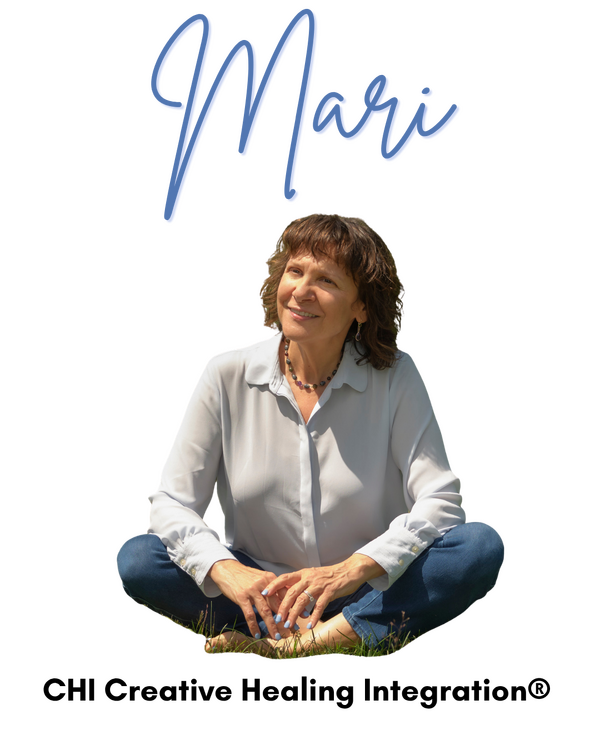
Mari Grande is a licensed Creative Arts Therapist, coach, and founder of Creative Healing Integration, Inc.
Through the MARI Mandala Corner and her coaching programs, she helps people reconnect with creativity, clarity, and healing in everyday life.

0 comments
Leave a comment
Please log in or register to post a comment